
Tiny House Zoning Laws: Where Can You Legally Park?
You have built the perfect tiny house. It has a beautiful kitchen, a cozy loft, and fresh paint. You are ready to move in. But then, you realize a big problem: Where can you put it?
You cannot just park a tiny house anywhere. Every city and town has rules. These rules are called “Zoning Laws.”
Zoning laws tell you what you can build and where. Unfortunately, many of these laws were written 50 years ago, before tiny houses existed. This makes things confusing.
In this guide, we will break down the legal jargon. We will explain where you can legally park your tiny home without worrying about a knock on the door from the police.
Why Is It So Hard to Find a Spot?
To understand where you can park, you must understand why cities say “no.”
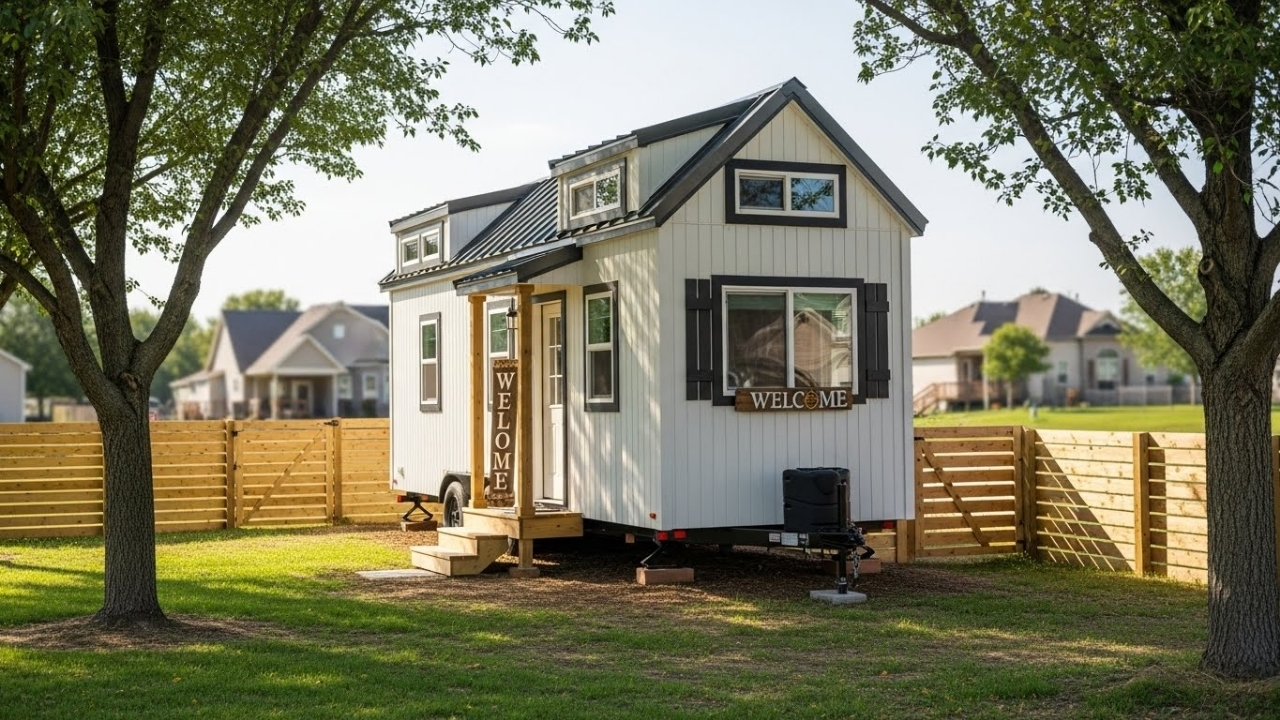
Most cities define a house by its size. For example, a law might say: “A single-family home must be at least 1,000 square feet.” If your tiny house is only 300 square feet, the city considers it “substandard” or too small to be a real house.
Also, if your house is on wheels, the city considers it a Recreational Vehicle (RV), not a building. Generally, you cannot live in an RV full-time in a residential neighborhood.
But don’t panic. There are legal solutions. Here are the 4 best places to park legally.
1. Backyard ADUs (Accessory Dwelling Units)
This is the fastest-growing legal option in the United States and Europe.
An ADU is a secondary house on a property that already has a main house. It is often called a “Granny Flat” or “Guest House.”
-
How it works: You park your tiny house in the backyard of a friend, family member, or a landlord who owns a regular house.
-
The Rules: Many cities (like Los Angeles, Portland, and Seattle) now explicitly allow tiny houses on wheels to be used as ADUs. You usually need to connect to the main house’s water and sewer.
2. Tiny House Communities
Imagine a village where everyone lives in a tiny house. These are called Tiny House Communities or “Villages.”
-
How it works: You rent a lot (a piece of land) in a dedicated park.
-
Why it’s great: You don’t have to worry about the law because the community has already approved the permits. Plus, you get neighbors who understand your lifestyle.
-
The downside: There are not enough of them yet, and waiting lists can be long.
3. RV Parks and Campgrounds
If your tiny house is on wheels and certified as an RV (by NOAH or RVIA), you can park it in an RV park.
-
How it works: You pay a monthly fee to rent a spot. This fee usually includes water, electricity, and WiFi.
-
The Rules: Some RV parks are for vacation only. You need to find a “Long-Term” RV park that allows full-time residents.
-
Warning: Some fancy RV resorts have an “Age Rule” (e.g., your vehicle must be newer than 10 years old) or appearance rules. Send them a photo of your house before you go.
4. Buying Your Own Land (Rural Zones)
If you want total freedom, you might think buying a piece of land in the countryside is the answer.
-
How it works: You buy land outside the city limits.
-
The Trap: Just because you own the land does not mean you can do whatever you want. Most rural land still has zoning laws against “Camping” full-time.
-
The Solution: Look for land with “Unrestricted Zoning” or “Agricultural Zoning.” In these areas, the government interferes less. However, you will likely need an off-grid system (solar and rainwater) because there are no utilities.
How to Talk to City Officials
Never try to hide your tiny house. It is stressful, and eventually, a neighbor might complain. Instead, go to the city planning office.
Here is a script you can use:
“Hello, I am interested in placing a movable tiny home on a property as an Accessory Dwelling Unit (ADU). Does our local zoning code allow for this, or is there a variance process?”
Using the correct words (like “ADU” or “Movable Tiny Home”) makes you sound professional.
Conclusion
Finding a legal parking spot takes research. It is not as easy as parking a car, but it is possible.
The laws are changing fast. Every year, more cities accept tiny houses as legal homes. Start by looking for backyard ADU opportunities or designated RV parks. Once you have a legal spot, you can relax and truly enjoy your simple life.
(Disclaimer: We are not lawyers. Zoning laws change from town to town. Always check with your local city hall before buying land or moving your house.)
